
Redmond Previous-Resident Sources
A backward search works best when the source matches the date. Recent Redmond property history starts with the parcel card and online recorded-document index. Older ownership moves to King County Archives. Household evidence comes from telephone books, city directories, released census schedules, newspapers, obituaries, and maps. A permit may date work on the site, yet it names people only in their project roles.
| Source for the address | Redmond years or scope | Where held | What the source can show |
|---|---|---|---|
| King County Landmark | Most instruments from August 1, 1991 forward; parcel route from 1997 | Recorder's online index | Grantor, grantee, type, recording date and number, image details |
| Recorded originals and microfilm | 1853 through July 31, 1991 | King County Archives research room | Deeds, easements, mortgages, plats, and other recorded instruments |
| Polk regional directories | Verified anchors in 1976, 1979, 1980, 1982, and 1985 | Library and catalog leads; exact shelf must be confirmed | Name, address, business, and occupation-style context |
| Kirkland-Redmond phone books | Digitized April 1944 and June 1949 editions | Kirkland Heritage PDFs | Listed subscriber, locality or rural route, dial number, business |
| Federal census | Released under the 72-year rule | NARA, KCLS databases, and Digital Archives where held | Household, age, birthplace, occupation, and enumeration geography |
| Redmond Project Viewer | Limited recent display windows | City GIS viewer and Development Services files | Project type, status, neighborhood, site, and participant roles |
| Sanborn maps | Washington collection scope 1867 to 1970; Redmond sheets vary | KCLS, Washington State Library, and Library of Congress | Building footprint, use, street, and block context, not occupants |
Start with deeds when the question is ownership. Start with a dated directory or census when the question is occupancy. Most complete Redmond histories need both trails, joined by address, parcel, date, and jurisdiction.
Start Redmond History by Parcel
Enter the current address in King County Parcel Viewer. Save the ten-position PIN, situs address, current jurisdiction, legal description, plat or lot, and the Assessor report link. The PIN gives later searches a stable land key even if the Redmond street text changed. County parcel lines are useful for context but do not replace a survey.
The Assessor detail may include a name field, mailing address, levy code, site address, legal description, year built, renovation year, building facts, and assessment values. Treat the name as an assessment association. A tax mailing address can belong to an owner, entity, trustee, or representative elsewhere, so it does not prove who lived at the site.
- Grantor
- The person or entity transferring an interest in a recorded instrument.
- Grantee
- The person or entity receiving the recorded interest.
- Chain of title
- The dated sequence of recorded transfers affecting the same land.
- Legal description
- The recorded land description, often using a plat, lot, block, or survey language.
Note: Save the Redmond parcel PIN and legal description before following names, because common names and changed street forms can lead to the wrong property.
Trace Redmond Owner Records
The King County Landmark portal does not search by street address. Use the parcel and legal-description work first. Name searches use last name, comma, first name. Results are paginated, and filters may need to be applied again. A result can identify a deed, easement, mortgage, lease, lien, plat, survey, condominium record, or other instrument.
The successful capture shows the online Recorder screen used to trace a Redmond house through recorded property interests.
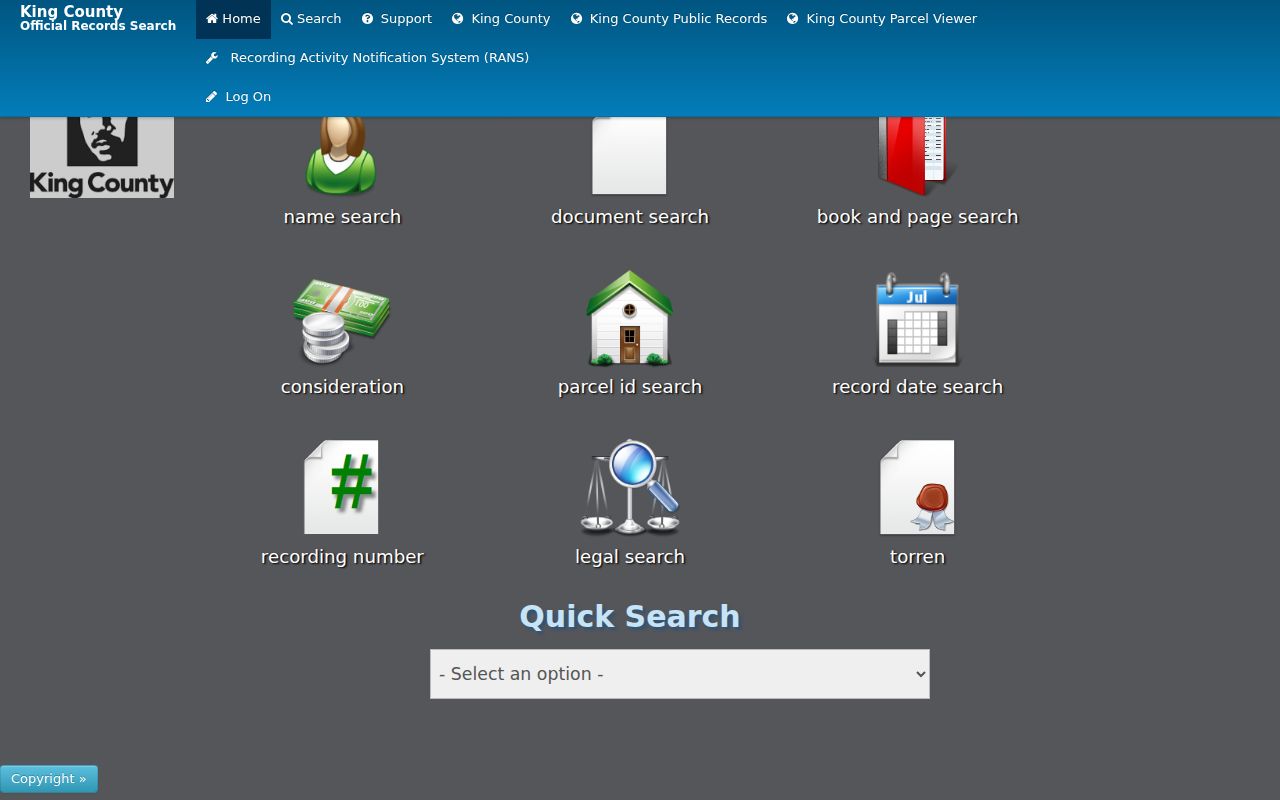
Record the document type, parties, date, recording number, parcel or legal description, and image status before moving to the prior transaction.
- Open the current Assessor detail and note the present tax-record name, PIN, and legal description.
- Find the current purchase deed by parcel where supported, then by grantee, grantor, date, or recording number.
- Read the instrument and identify the seller, or grantor. Keep the legal description tied to the result.
- Search that seller as an earlier grantee. Repeat one transfer at a time instead of merging same-name results.
- At the online cutoff, switch to Archives and ask for the grantor-grantee index, book and page, recording number, or legal-description route.
Older Redmond Deed Records
Landmark centers its coverage on documents recorded on or after August 1, 1991. King County Archives holds original recorded documents from 1853 through July 31, 1991 and provides access to earlier microfilm. An empty online result near that date is a custody signal, not proof that the deed chain ended.
Contact King County Archives for a research-room appointment. Give staff the PIN, legal description, grantor and grantee names, approximate date, and any book, page, or recording number. Ask whether the recorded-document series and microfilm are available. Counter help, phone or email contact, and mail copy routes matter because the older material is not fully searchable online.
King County Archives states that uncertified recorded-document copies are generally not charged under its policy. Confirm the current rule before ordering. A certified copy may require the Recorder's process and a different fee.
Redmond House Records at KCLS
KCLS house-history help is spread across several resources instead of one Redmond database. Its history and genealogy gateway points to Sanborn maps, census sources, Ancestry, FamilySearch, newspapers, and research support. Sanborn maps show buildings, materials, uses, streets, and blocks. They do not name all occupants. The exact Redmond sheet years must be confirmed within the licensed collection.
The KCLS History and Genealogy capture shows the library gateway for Redmond previous-resident research.
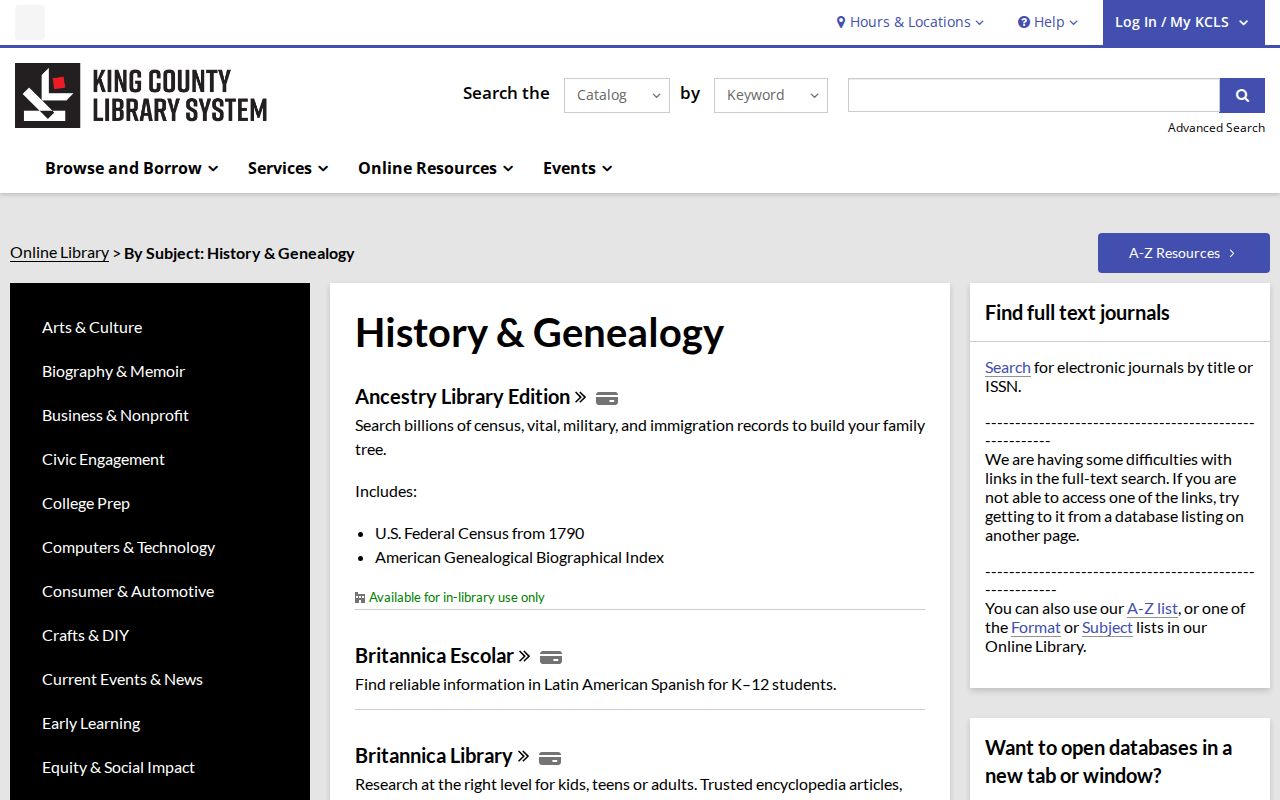
Use the library access rules shown there, then record the title, edition, date, page, and database used for each house-history result.
No single official Redmond house-history guide or complete criss-cross run was found in the research. Ask KCLS and the Redmond Historical Society for an address-first search. State whether the result is a map, directory, newspaper, photograph, obituary, permit, or deed so its limits remain clear.
Redmond Past Residents by Phone
The digitized April 1944 and June 1949 Kirkland-Redmond telephone books preserve a local snapshot before modern address forms. Visible entries can contain surname, given name, middle initial, title or household marker, locality or residence note, exchange or dial number, business name, service category, advertisement, and page date. Rural routes and locality labels are often more useful than a modern ZIP.
A phone directory lists subscribers and businesses, not every person who lived at an address. Search the surname, initials, alternate spellings, route, locality, and dial number. Compare the two editions without assuming that the same number means the same household. For the wider collection history and reading method, use the Redmond directory book page.
Pair Redmond Directories with Census
Released federal census schedules add household facts that a deed cannot. Census geography, however, can differ from the current Redmond boundary. The 1910 King County collection is indexed in Washington Digital Archives, while later public schedules follow the federal 72-year release rule. Use the historical locality, route, township, enumeration area, and nearby names rather than searching only today's city label.
- Place each deed transfer on a timeline and mark the nearest directory edition.
- Search the directory by surname, then by address, route, phone number, and spelling variants.
- Locate the closest released census using the address or historical enumeration geography.
- Compare names, ages, family ties, occupation, and address without forcing an uncertain match.
- Confirm the interval with a newspaper, obituary, yearbook, permit, probate file, or later deed.
The result should state what each source says and when. A directory line plus a compatible census household is strong evidence, but neither should be rewritten as proof of continuous residence between dates.
Redmond Newspapers Fill Address Gaps
KCLS lists Seattle Times microfilm from 1983 through 2009 at the Redmond branch, subject to current equipment and access. The Redmond Historical Society describes an almost century-long local newspaper run and maintains bound and digitized material from the Sammamish Valley News, which began in 1946 and served the community through 1997. Search exact addresses, surnames, businesses, legal notices, and quoted phrases.
The KCLS newspaper microfilm capture documents an in-library route when a web search does not reach the needed Redmond issue.
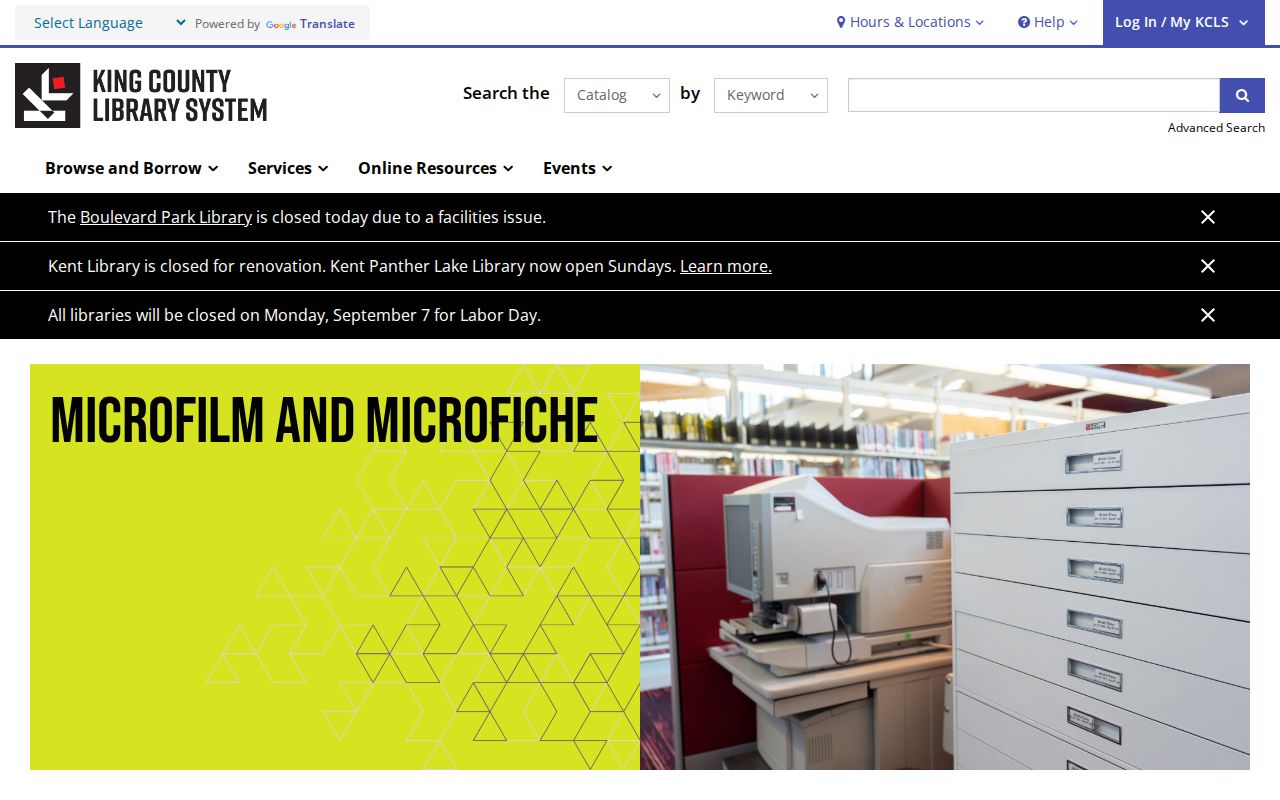
Microfilm can connect an address to a dated sale notice, business advertisement, event, or obituary while preserving the publication context.
KCLS obituary research uses a known date of death plus a ten-day range. It handles one noncommercial request at a time, and most requests are completed within 14 working days. An obituary can explain a change between directory years and point to relatives, but it does not replace probate or deed evidence.
Redmond Boundaries Change the Trail
Redmond incorporated in 1912, but its current map grew through later annexations. Education Hill joined in 1951, Overlake in 1962, Viewpoint in 1964, and Bear Creek in 1966. About 65 percent of the city's reported annexed acreage came from 1950 through 1970. East Redmond was separately incorporated in 1956 and disincorporated in 1964. Sammamish incorporated in 1999.
Those changes explain why the same place can appear under a rural route, East Redmond, unincorporated King County, a Redmond mailing address, or another jurisdiction. The city's historic street-sign map also preserves labels such as York Road, Perrigo Road, Railroad Avenue, Grass Lawn Road, and Campton Road. Record the document date and jurisdiction at that date. Current city limits should not be projected onto an older deed or directory.
Note: Around Redmond's 98053 mailing area, compare USPS, city, county parcel, and Assessor labels before choosing the custodian for an old record.
Limits on Redmond Previous Residents
Ownership and occupancy are different trails. A deed documents a recorded transaction or interest at a date. An Assessor card describes tax assessment. A permit identifies a person or business in a stated project role. A telephone book shows a listed subscriber when the volume was printed. A Sanborn map describes a structure. None alone proves every person who lived at the Redmond address.
For a deceased owner, a Superior Court probate file, obituary, cemetery index, or later deed may identify an estate event or heir. Keep the finding tied to its source and date. For a living person, use the least personal detail needed to answer the house-history question. Do not evade a sealed record, redaction, or Washington Address Confidentiality Program substitute address.
Lawful use. Trace Redmond past residents for family history, estate work, property history, or personal curiosity. Never use an address trail to track, harass, intimidate, or expose a living person.